
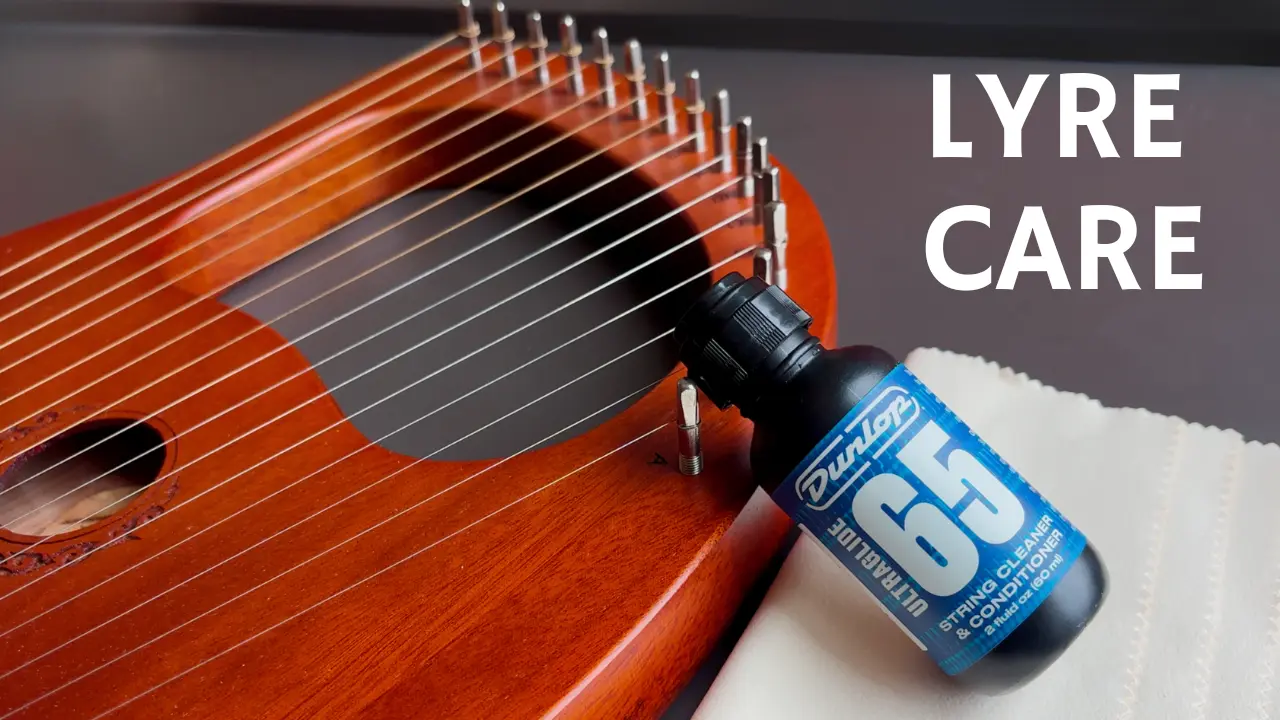
Lyre harps are exquisite instruments, and I want to keep them looking and sounding their best. Like any musical instrument, the lyre harp requires proper care in cleaning and maintenance. With the right methods and products, your instrument can remain in excellent condition, just as it was the day you brought it home!
Caring For Your Lyre Harp
Most lyre harps are made of wood, a natural material that can react to changes in the environment. If not properly maintained, your instrument can suffer damage to the finish (such as checking and fading) or even to the structure (including cracking and ungluing). Here’s how to keep your lyre harp clean and pristine:
1. Store Your Instrument in its Case or Bag When Not in Use
Just like any item in your home, your lyre harp will collect dust if left exposed. To prevent this, always put it in its case or bag after each use. This keeps it away from airborne dust, which can dull the appearance of the lyre harp and affect its sound quality over time. Additionally, storing it properly can protect it from environmental factors.
2. Avoid Direct Sunlight
Direct sunlight is a heat source that can damage the instrument’s structure (remember what I said earlier?). Furthermore, direct exposure will damage the finish, fading it away. To avoid these unpleasantries, always keep the lyre harp out of direct sunlight. This will help maintain its beauty and ensure it stays in great condition for years to come.
3. Avoid Extreme Temperature Changes
Keep your lyre harp in a stable, comfortable room temperature. Extreme fluctuations in temperature can damage the wood, causing it to swell or shrink. Don’t place your harp near radiators, vents, or any source of extreme heat or cold. If your harp has been in extreme temperatures (like being left in a cold car), allow it to acclimatize before playing! A good rule of thumb is to bring the lyre inside, leave it in its case (do not open) at room temperature for the same amount of time it was in the extreme temperature. For example, if it was in a cold trunk for two hours, let it sit in its case for two hours before opening it.
4. Keep the Humidity Just Right
Wooden instruments perform best in environments with humidity levels between 40% and 60%. Too much humidity can cause the wood to swell and bow, while too little can cause it to dry and crack. If you live in an area that experiences significant fluctuations in humidity (either above or below the ideal 40-60%), consider using a product like D’Addario Humidipaks when storing your lyre harp in its case.
5. Clean the Lyre with a Dry Cloth
Most modern lyre harps have finishes that can get damaged by water. Avoid using a damp cloth, as it can harm the finish and cause water absorption issues like swelling or staining. Don’t use furniture cleaners, as they can leave a waxy residue. Instead, choose a cleaner made for stringed instruments. For example, Jim Dunlop Formula 65 Guitar Polish, made for acoustic instruments, is a great option. Just spray it on a soft cloth (preferably microfiber) and gently rub it on the lyre. That’s it!
Caring for Your Lyre Harp Strings
Your lyre harp’s strings also need some love and attention to maintain their best sound. Modern lyre harps use strings similar to those of guitars (plain steel and wound steel strings that have a ball end to secure them to the body.)
Like guitar strings, steel lyre harp strings are prone to dirt, corrosion, and other issues caused by sweat and oils from your hands, especially if you pluck with your fingers. Over time, this can result in strings that sound dull and feel rough. Fortunately, there are several steps you can take to prolong the life of your strings:
1. Wipe Your Strings with a Soft Cloth After Each Use
This simple practice is essential for maintaining the health and longevity of your strings. By regularly wiping down your strings after each playing session, you can effectively remove excess sweat, oil, dirt, and other debris that may accumulate during use. Taking a few moments to do this after playing will greatly extend their lifespan.
2. Use Guitar String Cleaner
There are specialized products designed to clean and lightly lubricate steel strings, such as Jim Dunlop Ultraglide 65 String Cleaner and Conditioner, and GHS Fast Fret String Cleaner and Lubricator. Both of these products come in easy-to-use applicator bottles. To use them, simply rub the applicator across the strings and then wipe off any excess with a dry cloth. It’s effortless, and your strings will thank you!
3. Change Is Inevitable
Eventually, even with regular cleaning, your strings will wear out and produce a dull sound. When this happens, it’s time to replace them with a fresh set of strings to enjoy the bright and clear tone they provide.
Following these simple steps, you can keep your lyre harp looking and sounding its best! Establishing a routine will reward you with an instrument that remains the envy of your neighbors!
– – – – –
This blog post contains affiliate links, which means I may earn a small commission if you make a purchase through these links at no additional cost to you. Your support helps me continue to provide valuable content. Thank you for reading!
