
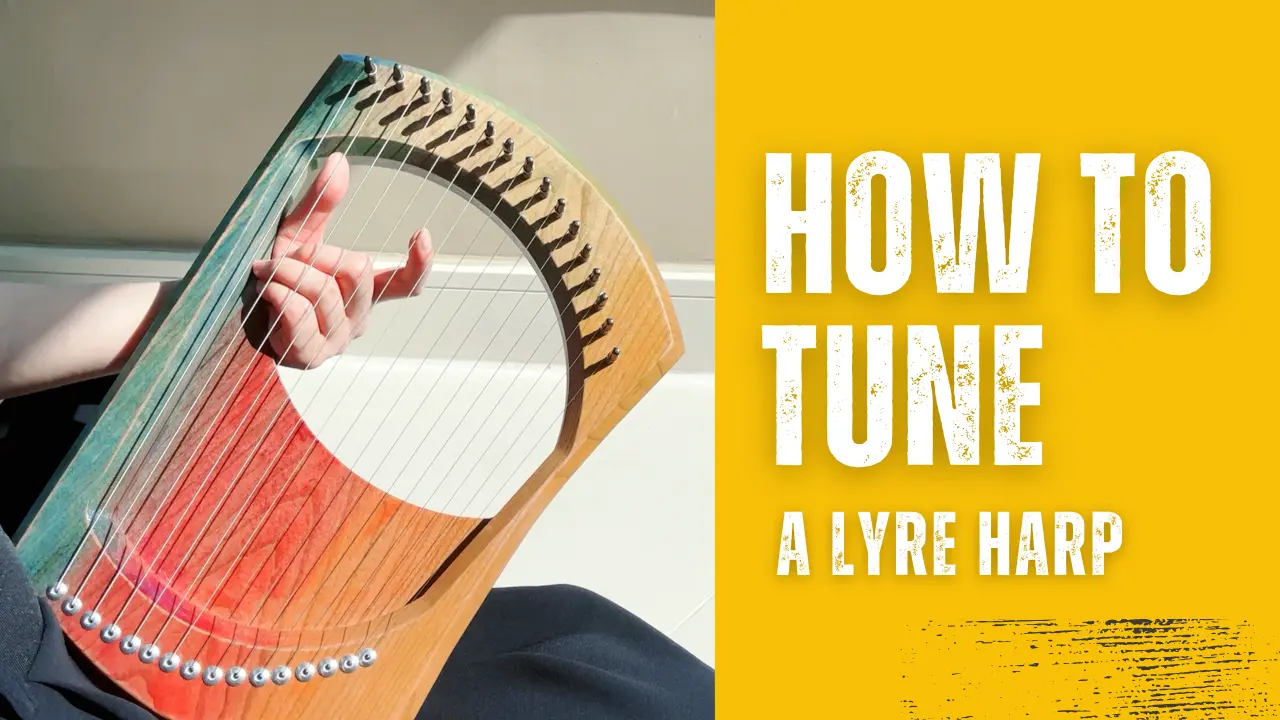
Don’t you hate it when you grab your lyre harp and sit down to play some music in a Zen-like fashion, only to hear a couple of notes that sound off? So do I!
Like all other stringed instruments, a lyre harp requires regular tuning to keep it sounding its best. While this may initially seem intimidating, worry not! With this guide, you’ll master the art of tuning your lyre harp in no time!
How to Tell if Your Lyre Harp Needs Tuning?
The easiest way to determine if your lyre harp is out of tune is to use your ears!
Play each string and listen to the notes. Does something sound off? Do two strings that should be tuned to the same note (but at different octaves) sound right? If something sounds off, it’s time for a tuning.
Strings also tend to detune over time. If you haven’t played your lyre harp in a while and want to start again, it’s a good idea to check its tuning to ensure it’s in tune.
Tuning New Strings: Common Issues
Many new players have told me the same issue – new strings often unwind right after tuning, causing the lyre to slip out of tune almost immediately! Don’t worry, this is normal! It happens to everyone, so you’re definitely not alone.
New strings require a break-in period, during which you’ll need to tune them daily until they settle on the instrument (generally within one to two weeks). After this period, the strings will hold their tune much better.
To help break in new strings faster, you can give each new string a gentle stretch up and down. Just be sure not to pull so hard that the string breaks. Be gentle!
Essential Tools for Tuning Your Lyre Harp
You need two essential tools to tune your lyre harp.
1. Tuning Wrench
Your lyre harp should have come with a tuning wrench (hopefully). This tool allows you to turn the tuning pegs to either raise or lower the pitch.
2. Pitch Reference Tool
You need a tool that listens to the note, identifies its pitch, and tells you how off (sharp or flat) that pitch is. There are many different options for this, such as:
- Clip-on Tuners: Clip it on your lyre harp to read the pitch through the instrument’s vibration (ensure you find one that fits your lyre harp).
- Smartphone Tuner Apps: Many free options are available. Just ensure you’re in a quiet environment, as the app can easily pick up other sounds.
- Built-in Microphone Tuners: These also require a quiet setting for best performance.
- Tuner pedal (like the ones used by guitarists): Suitable for lyre harps equipped with a pickup.
Identifying the Pitch for Each String
Generally, lyre harp strings are arranged from low to high pitch. Some go from left to right (much like a piano), while others go in the opposite direction (much like a traditional harp).
Most manufacturers list the pitches in the instrument’s documentation, and some even engrave each string’s pitch directly on the instrument.
Step-by-Step Tuning Process
Here’s how to tune your lyre harp effectively:
1. Identify the First String: Begin by selecting the first string you want to tune. Choose either the lowest or the highest string and work your way from there.
2. Check the Pitch: Play the string and use a tuner to check if the pitch is correct.
3. Adjust Accordingly: Place your tuning wrench on the peg of the string. Based on your pitch check:
- If the note is flat (below the desired pitch), tighten the string to raise the pitch.
- If the note is sharp (above the desired pitch), loosen the string to lower the pitch.
4. Repeat for the Remaining Strings: Follow the same procedure for the other strings on your lyre harp.
Tips for Successful Tuning
1. Go Slow: Turning the tuning wrench too fast and far, especially when tightening a string, can snap the string. Take your time. Make small increments when turning the pegs to the desired pitch. Slow and steady wins the race!
2. Tune Up to Pitch: If the note is sharp (i.e., the pitch is too high), it’s often easier to lower the pitch slightly below the intended note and then gradually bring it back up, rather than trying to bring it down directly.
3. Careful Removal of Tuning Wrench from the Peg: Wiggling the wrench back and forth when removing it can cause the peg to move slightly, knocking the pitch off a bit. Take your time.
Keeping Your Lyre Harp in Tune
Stringed instruments will go out of tune on their own. Environmental changes can affect the tuning of wooden instruments. When not in use, store your lyre harp in a bag or case at a stable room temperature and humidity. Avoid placing it near heaters, vents, or direct sunlight.
It’s inevitable that old strings will have to be replaced eventually. If you’ve had the same strings for an extended period and noticed that they need retuning more often than usual, it’s time to replace them.
Conclusion
Tuning your lyre harp might seem daunting, but by following these simple tips and tricks, maintaining your lyre harp’s tuning will be a breeze! And that’s all there is to it! Happy playing!
