
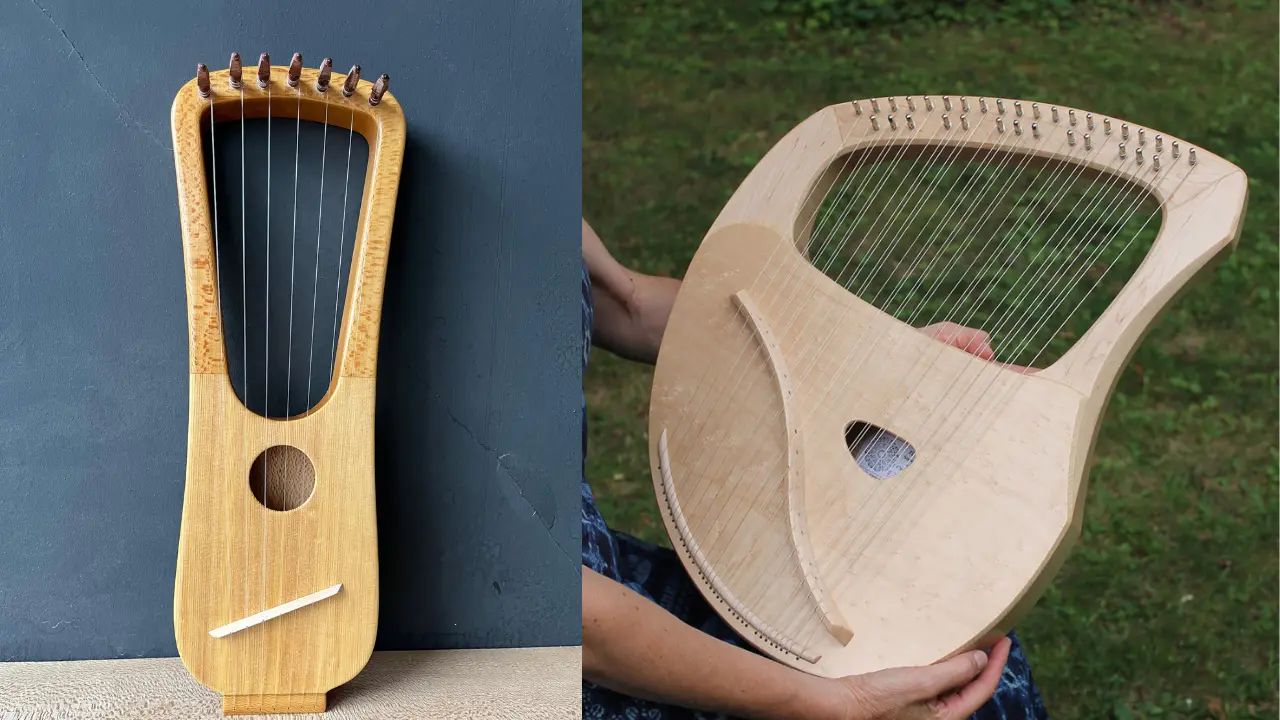
When shopping for a lyre harp, you may encounter some funny words, such as diatonic, pentatonic, and chromatic. While those with a little knowledge of music theory will surely know the difference, for the average person getting into the instrument, these are terms of mystery and wonder.
In short, pentatonic, diatonic, and chromatic lyre harps come in different tunings and keys. Some are easier to play, while others may require more instruction. In this article, we’ll explore all three types of lyre harps, discuss their pros and cons, and help you make the right decision when shopping for a lyre harp.
So, what does all this “tonic” stuff mean?
The terms pentatonic, diatonic, and chromatic refer to specific scales or collections of notes. The scale your lyre harp is set up affects what you can play on the instrument, though some scales make playing simple things much more straightforward than others.
The pentatonic scale consists of five notes, typically tuned to Do, Re, Mi, Sol, and La (though variations exist). This scale is widely used in both popular and traditional music from various cultures, and it sounds very pleasant! On the piano, you can play the pentatonic scale by using the black keys, starting with the group of three followed by the group of two, which gives you the F# major pentatonic scale.
The diatonic scale is a seven-note scale corresponding to Do, Re, Mi, Fa, Sol, La, and Ti, also known as the major scale. If you play all the white keys on a piano from C to C, you have a diatonic major scale.
The chromatic scale is the big daddy of them all, incorporating all 12 pitches within the scale. Play all the white and black keys on the piano in order, and you get the chromatic scale.
The Pentatonic Lyre Harp
The pentatonic lyre harp is tuned to a Do-Re-Mi-Sol-La scale (though some variations exist) and is the easiest to play for someone starting. Because of the choice of pitches (there isn’t a wrong note in this scale), a person can easily improvise simple little melodies by ear and have some good, aimless fun making music! These lyre harps usually feature 7 to 12 stings; some will also name the strings’ pitches directly on the instrument.
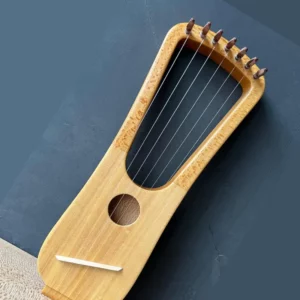
Additionally, the pentatonic scale is great for meditation and relaxation because you can play without thinking, creating beautiful music aimlessly. This makes it a wonderful tool for those seeking a calm and soothing experience.
Note that because you only have five different pitches, only specific melodies can be played on this instrument. For example, you cannot play “Happy Birthday” or “Twinkle Twinkle Little Star” because these songs require more than five notes.
Get a pentatonic lyre if you:
- Are an absolute beginner looking for an easy-to-play instrument.
- Want to play music from cultures that use the pentatonic scale.
- Just want to have some fun creating music without the pressure of hitting wrong notes.
Avoid getting a pentatonic lyre if you:
- Want to play a wide range of songs that require more pitches than those available in the pentatonic scale.
The Diatonic Lyre Harp
A diatonic lyre harp features the “Do-Re-Mi-Fa-Sol-La-Ti” scale, making it well-suited for playing melodies and a broad range of songs. These instruments come in various shapes and sizes, with string counts ranging from as few as 7 to as many as 24, depending on the manufacturer. Similar to pentatonic lyre harps, some manufacturers label the notes directly on the instrument.
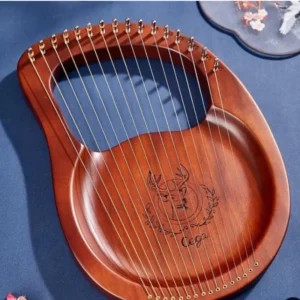
Because they are tuned to a seven-note scale, diatonic lyres allow for more complex melodies and a wider variety of songs compared to pentatonic lyres. While some instruction may be beneficial, many online resources are available to help you get started (including this website!).
Get a diatonic lyre if you:
- Want to play a wide range of melodies and songs.
- Prefer an instrument that can develop with your musical abilities and offer new challenges as you progress.
Avoid getting a diatonic lyre if you:
- Prefer a simpler instrument with fewer strings or one that is easier to play without much thought.
- Are seeking an instrument with a specific tuning or sound that is not available on a diatonic lyre harp.
The Chromatic Lyre Harp
The chromatic lyre harp is the big daddy of lyre harps, featuring multiple strings (some models have over 30 strings) and two rows of tuning pins. One set is designated for natural notes (the white keys on a piano), while the other is for the semitones in between (the black keys). With this lyre harp, the sky’s the limit! With access to the full 12-note scale, you can play numerous pieces in various keys, freeing you from the constraints of diatonic and pentatonic lyre harps.
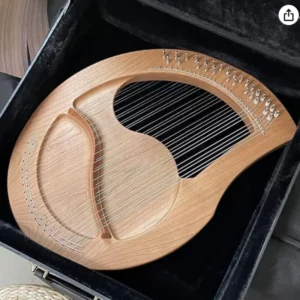
While you can play many more songs across different keys and even change keys during a song, chromatic lyre harps are typically larger and heavier than their pentatonic and diatonic counterparts. They are also generally more expensive. Due to the technical skills required to master chromatic lyres, private instruction is often the best way to learn how to play them effectively.
Get a chromatic lyre if you:
- Want the flexibility to play in all 12 keys without needing multiple lyres with different tunings.
- Enjoy music with numerous accidentals, such as classical pieces.
- Are excited about the challenge of a more complex instrument.
Avoid getting a chromatic lyre if you:
- Feel overwhelmed by the need to learn the instrument thoroughly to get the most out of it.
- Prefer an instrument that allows for easy, carefree playing for relaxation and enjoyment.
So there you have it! This information will help you navigate the different types of lyre harps available and find the right one for you!
